The Oath (Ukei)

Chapter 7

The Oath (Ukei)Ukei

A contest of oaths gives rise to the imperial ancestor god.

◀ Back to Contents
This retelling is a heavily condensed, dramatized modern version of the original Kojiki. Some episodes are omitted and wording is simplified; please consult the original text or scholarly translations for accuracy.

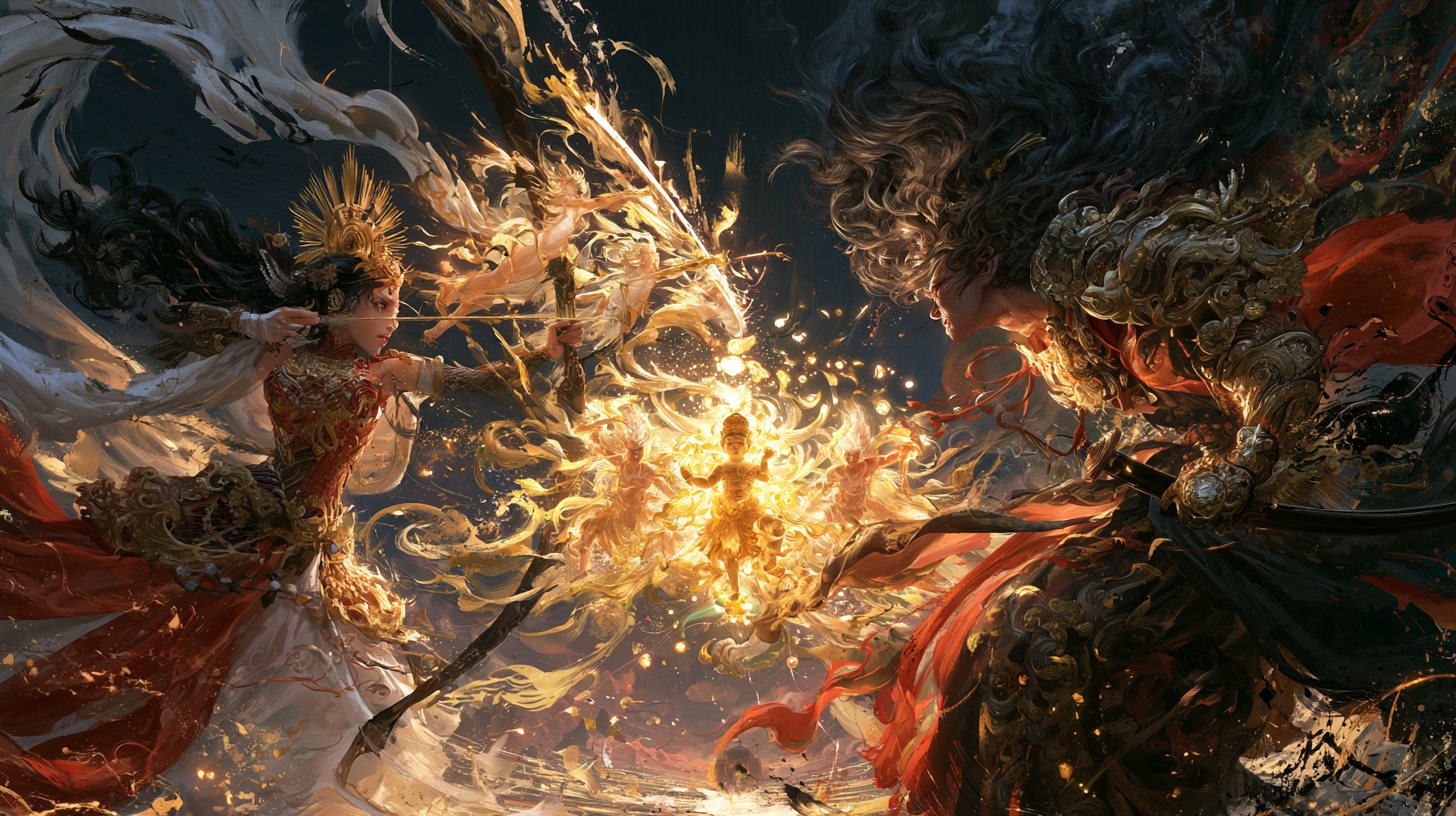
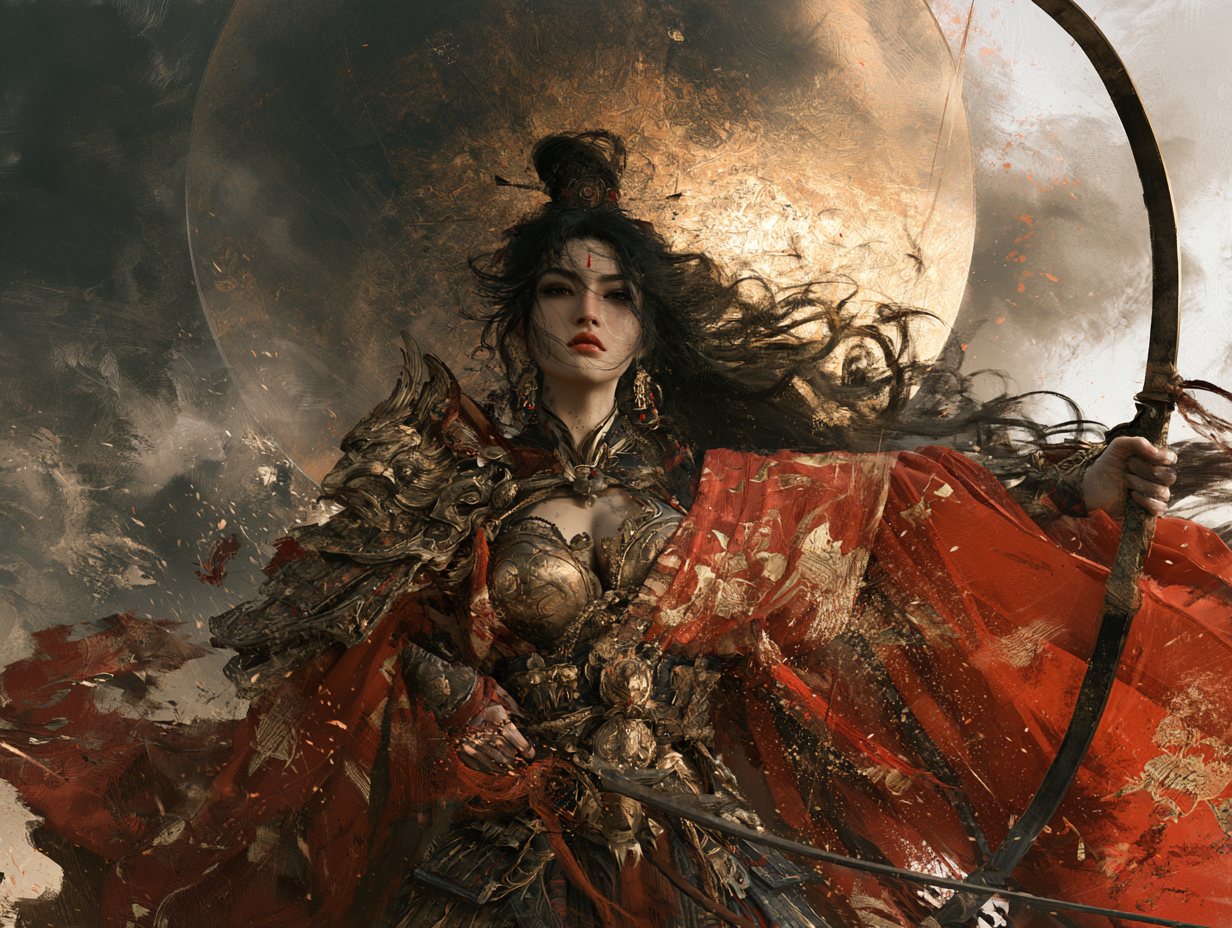
Refusing to rule the sea and weeping for his late mother, Susanoo was banished by his father. Before departing he climbed to Heaven to bid his sister farewell—but the mountains and rivers shook, and Amaterasu, suspecting he came to seize her realm, armed herself and met him with a bow.
The Oath (Ukei)

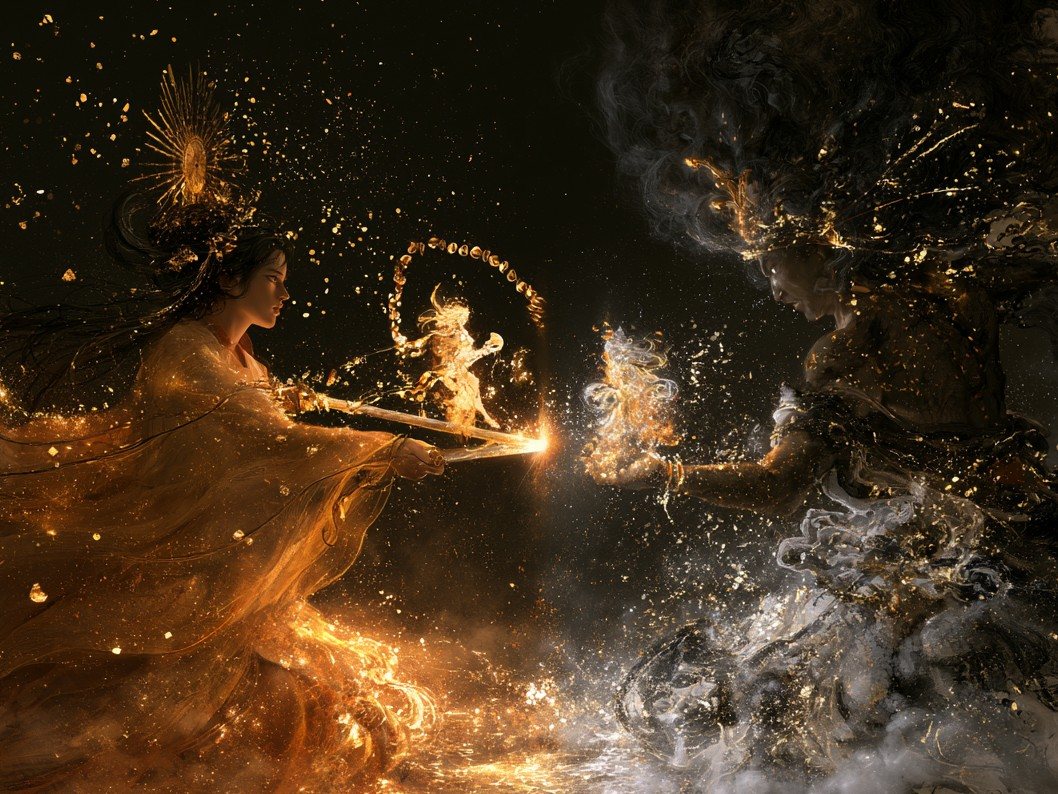
To prove his innocence, Susanoo proposed an ‘ukei,’ an ordeal of oaths. When Amaterasu chewed and blew out his sword, three goddesses—the Munakata deities—were born; when Susanoo chewed her jewels, five male gods appeared.
The Oath (Ukei)

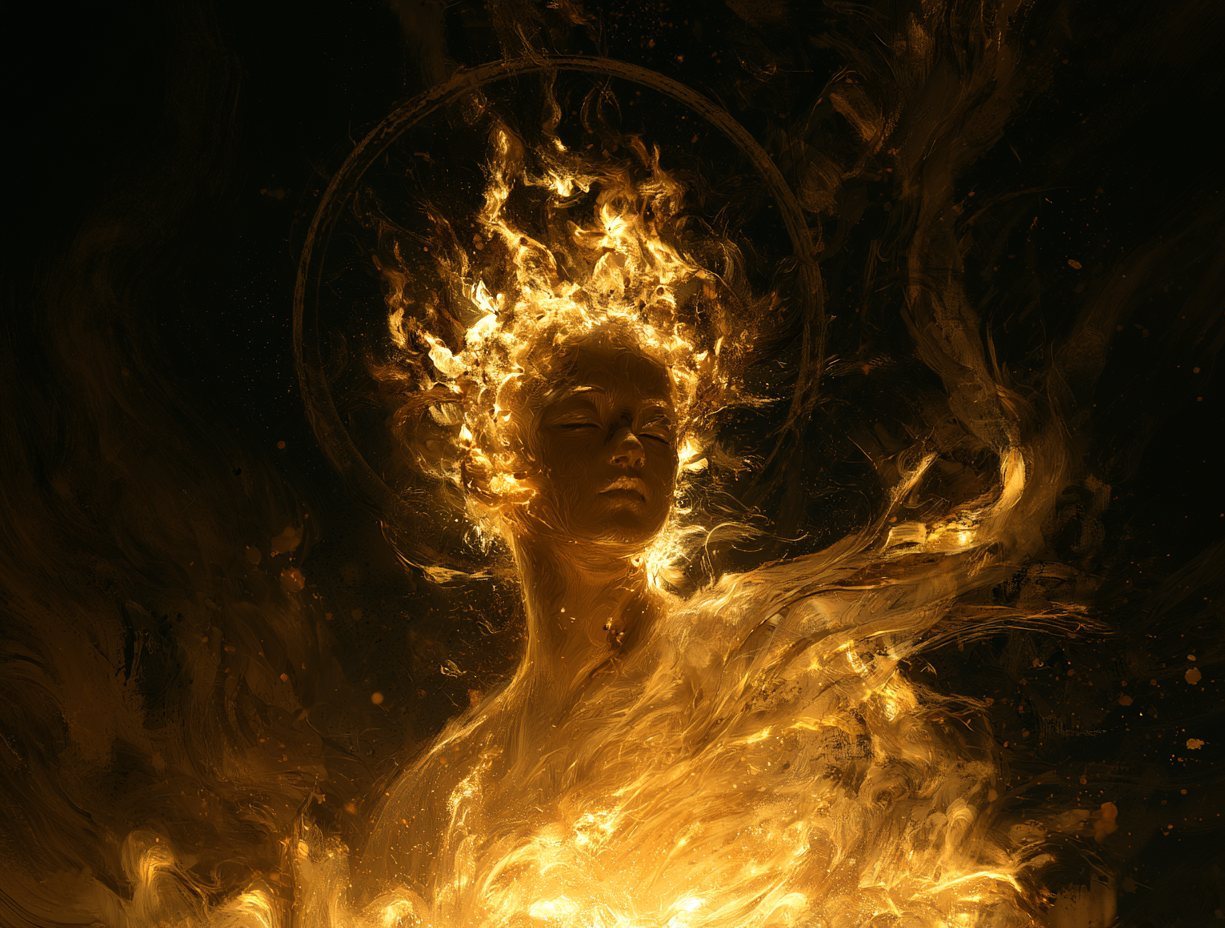
The first of these was Ame-no-Oshihomimi, father of the future heavenly grandson Ninigi and ancestor god of the imperial house. His purity seemingly proven, Susanoo exulted—and that triumph would soon turn to reckless violence.
The Oath (Ukei)

Deities in this chapter

Amaterasu
天照大御神
Meets her brother in armor; from his sword she brings forth three goddesses.
Susanoo
須佐之男命
Proposes the oath to prove his innocence, then grows arrogant in victory.
Ame-no-Oshihomimi
天忍穂耳命
The first god born of the oath; father of Ninigi and revered as ancestor of the imperial line.

Background & Trivia

The Munakata goddesses and Okinoshima
The three goddesses of the oath are enshrined at Munakata Taisha as guardians of the sea; the island of Okinoshima, a ‘divine island,’ is a World Heritage Site.
‘Ukei’ as ancient divination
An ukei fixes the meaning of an outcome in advance to read the will of the gods—a form of divination that recurs throughout the myths.
Share this chapter✕ PostLINEFacebook