Yamata-no-Orochi, the Eight-Forked Serpent

Chapter 9

Yamata-no-Orochi, the Eight-Forked SerpentYamata no Orochi

Banished from Heaven, Susanoo slays the great serpent by cunning.

◀ Back to Contents
This retelling is a heavily condensed, dramatized modern version of the original Kojiki. Some episodes are omitted and wording is simplified; please consult the original text or scholarly translations for accuracy.

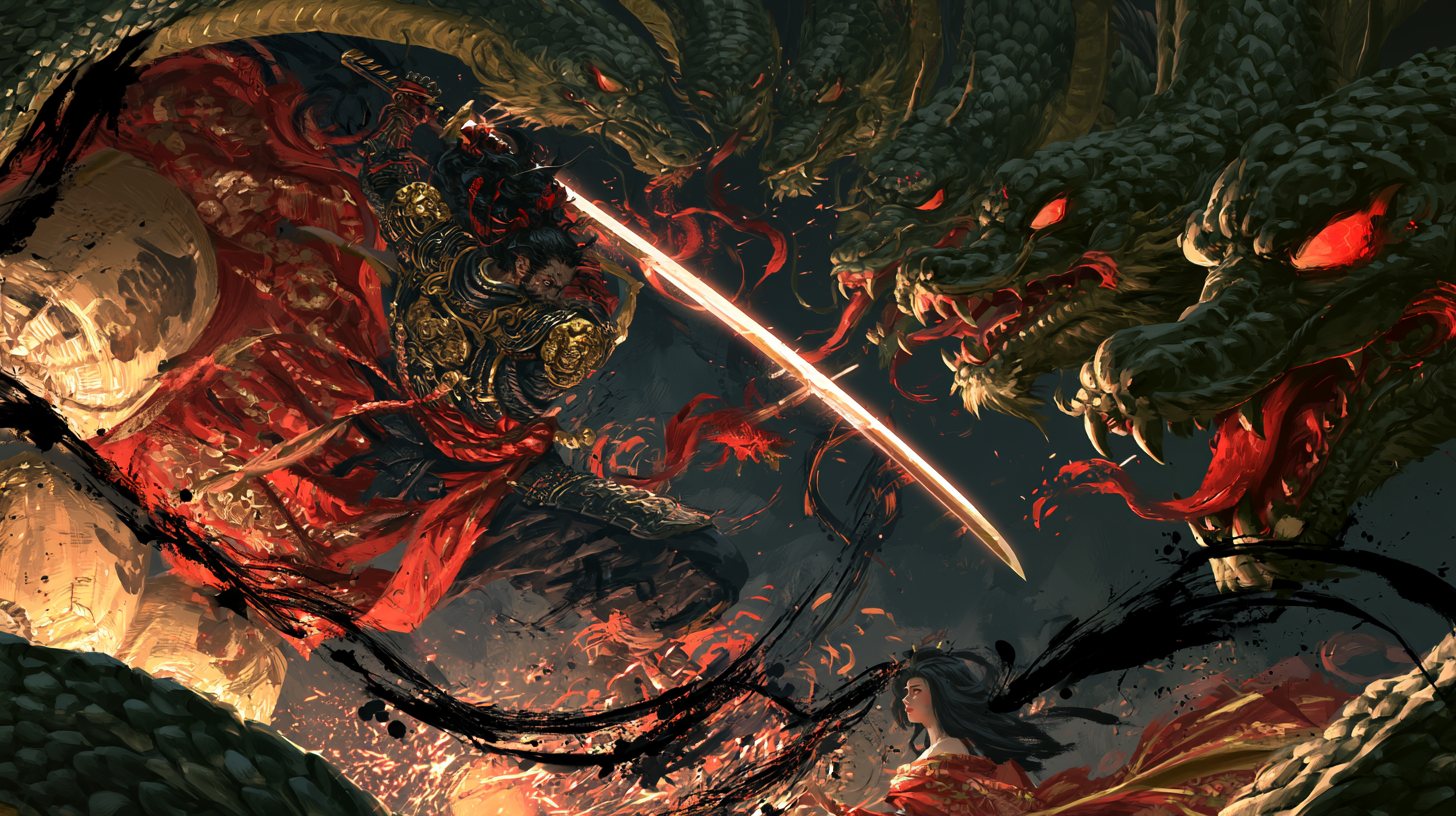
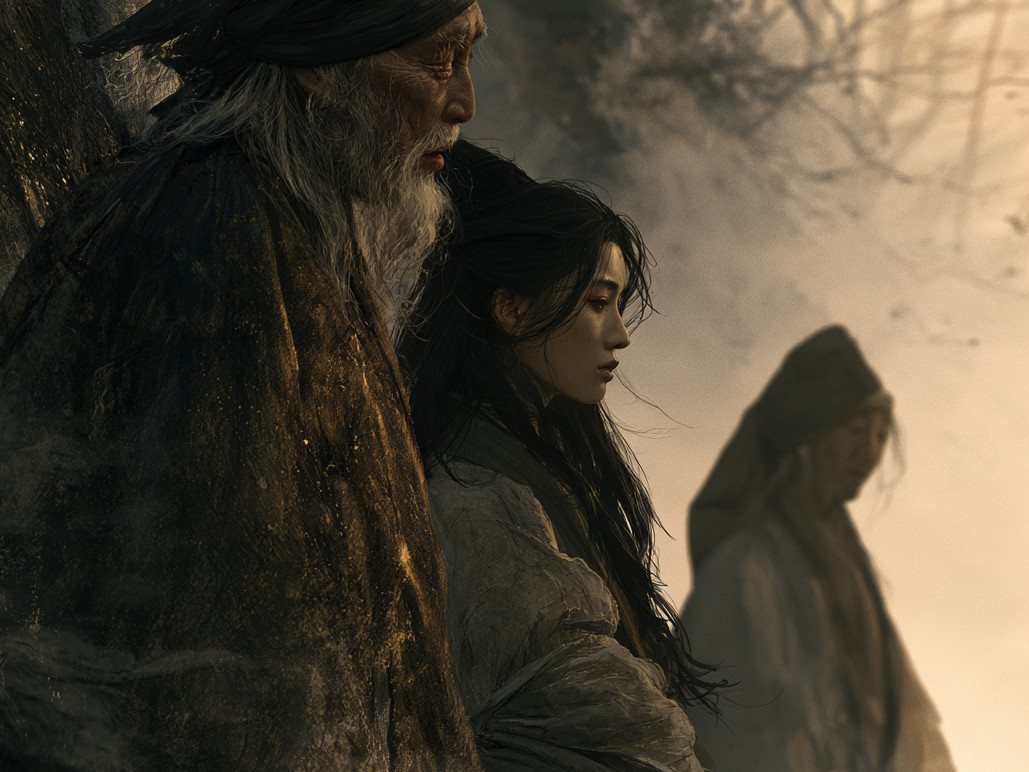
Cast out of Heaven, Susanoo came down to the upper reaches of the Hi River in Izumo, where he found an old couple weeping over their daughter, Kushinada-hime. Each year a monstrous eight-headed, eight-tailed serpent devoured one of their daughters, and now only she remained.
Yamata-no-Orochi, the Eight-Forked Serpent

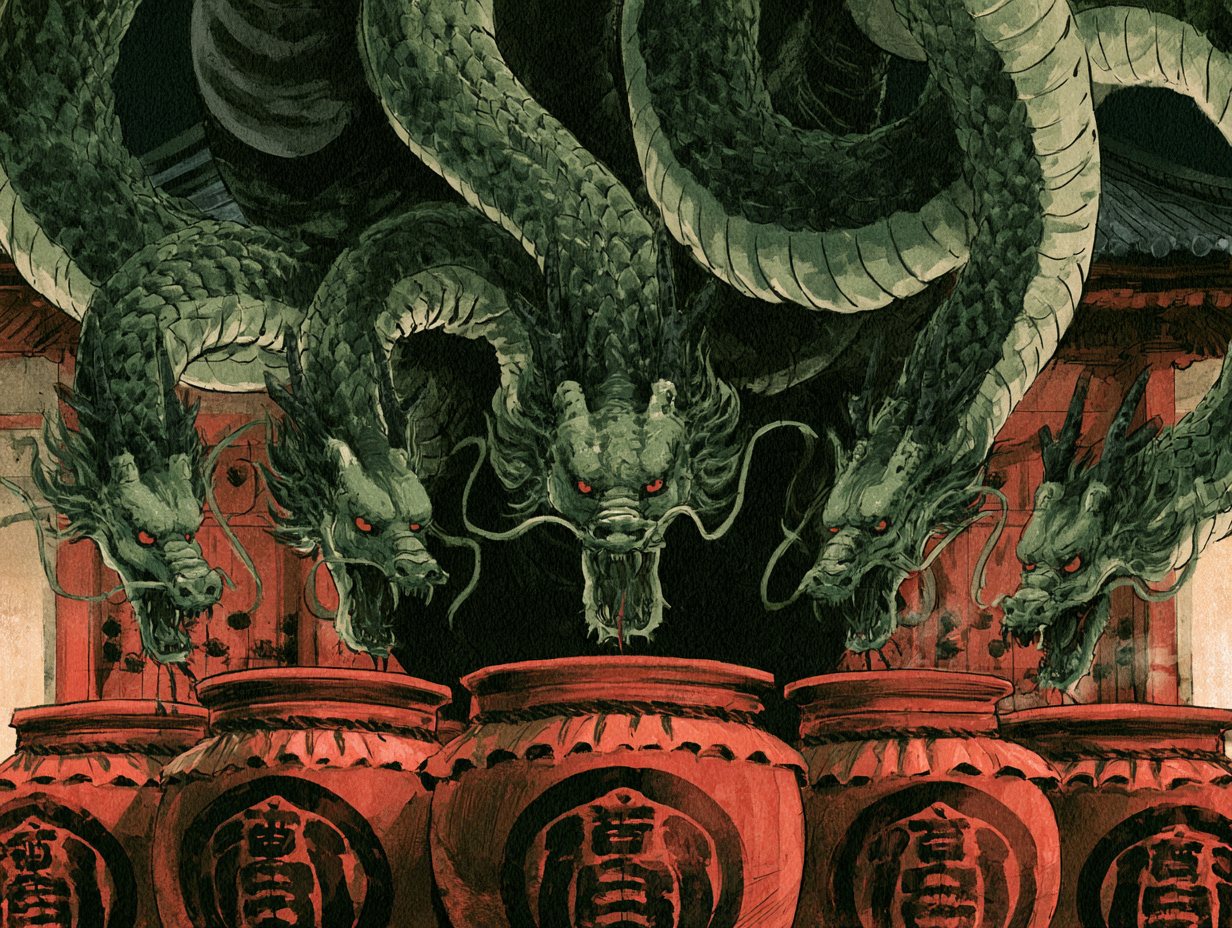
Susanoo turned the maiden into a comb and set it in his hair, then had eight vats of strong, many-times-brewed sake prepared behind eight gates. The serpent drank until it slumped drunk, and he hewed it to pieces with his great sword.
Yamata-no-Orochi, the Eight-Forked Serpent

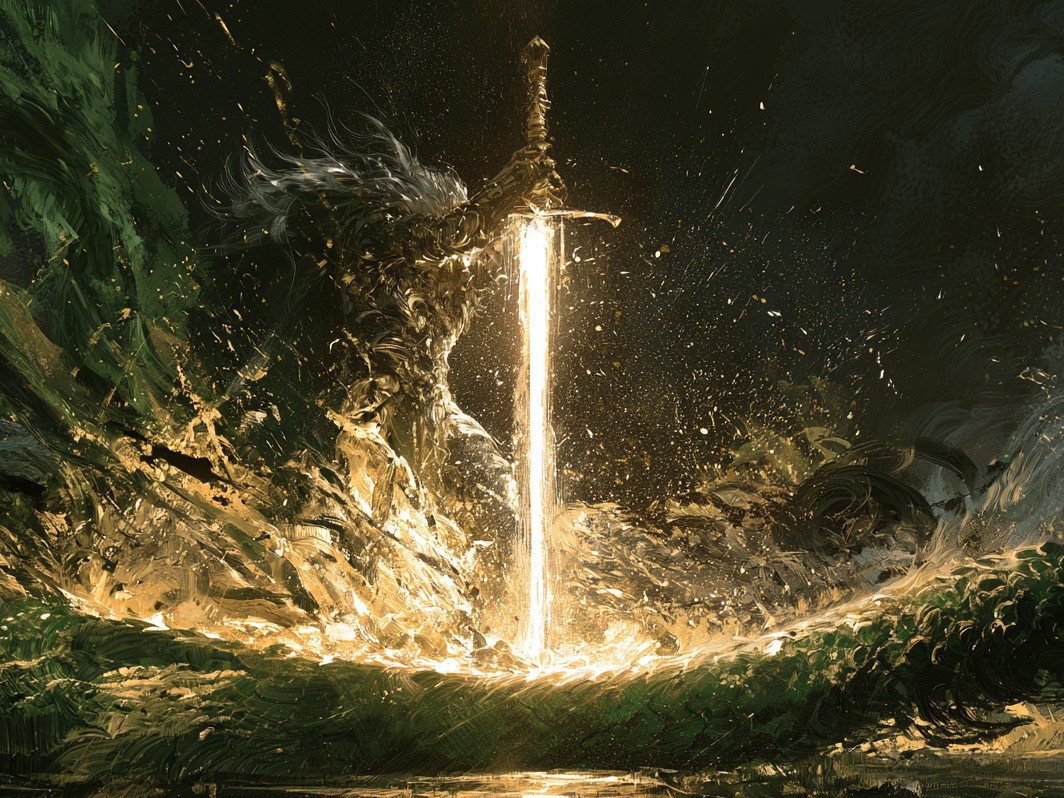
In its tail he found a magnificent blade—Kusanagi, the ‘Grass-Cutting Sword,’ later one of the Three Imperial Regalia—which he offered up to Amaterasu. He then wed Kushinada-hime and built a palace in Izumo.
Yamata-no-Orochi, the Eight-Forked Serpent

Deities in this chapter

Susanoo
須佐之男命
The hero who slays the serpent by cunning—turning from troublemaker to savior.
Kushinada-hime
櫛名田比売
The maiden saved from the serpent; she becomes Susanoo’s wife, a goddess of the rice fields.
Yamata-no-Orochi
八岐大蛇
The eight-headed, eight-tailed monster—sometimes read as the spirit of a flooding river.

Background & Trivia

Kusanagi at Atsuta Shrine
The sword from the serpent’s tail, one of the Three Regalia, is said—after the tale of Yamato Takeru—to be enshrined at Atsuta Shrine in Nagoya.
The first waka poem
The verse Susanoo composed on building his palace (‘Yakumo tatsu…’) is regarded as the oldest Japanese waka poem.
Share this chapter✕ PostLINEFacebook